What Is Fractional CO2 Laser Skin Resurfacing? Benefits, Downtime, and Results
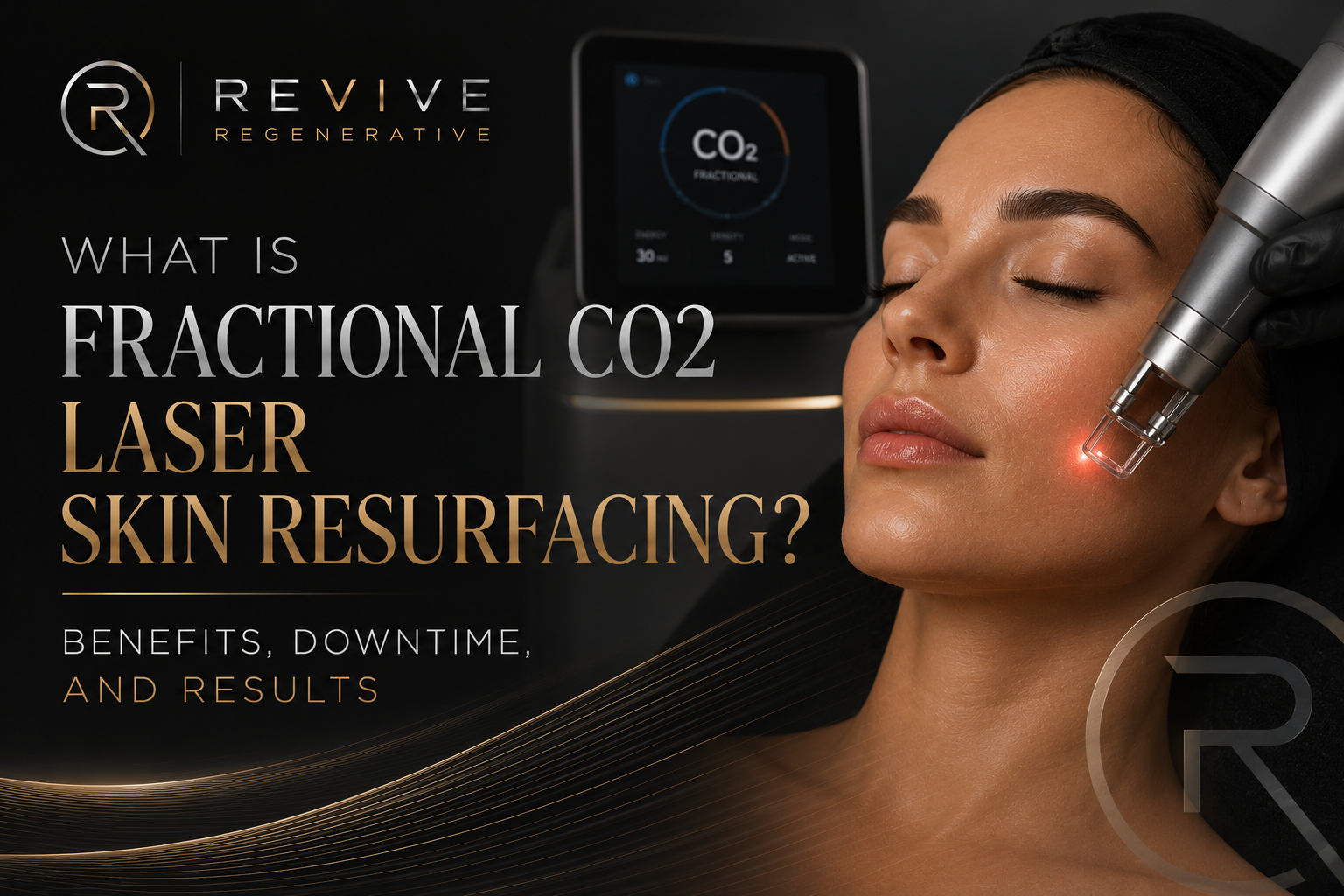
If you have been researching ways to smooth fine lines, soften scars, or undo years of sun damage, you have probably come across fractional CO2 laser resurfacing. It is one of the most established and effective skin-renewal treatments in aesthetics, and for the right person it can deliver results that creams and lighter treatments simply cannot match.
This guide explains what fractional CO2 laser resurfacing actually is, what it treats, what recovery really looks like, and how to decide whether it is worth considering. Think of it as the honest overview to bring to your provider consultation.
What is fractional CO2 laser resurfacing?
CO2 laser resurfacing uses a carbon dioxide laser to precisely remove damaged outer layers of skin and heat the layers beneath, which prompts your body to rebuild fresh, smoother tissue. It is considered an ablative treatment, meaning it works by carefully removing a thin amount of skin rather than only heating it.
The word "fractional" is the key modern upgrade. Instead of treating the entire surface at once, a fractional laser delivers energy in a grid of tiny microscopic columns. It treats a fraction of the skin while leaving healthy, untouched skin in between each column. That surrounding healthy tissue acts as a reservoir for faster healing, which is why fractional CO2 offers much of the power of older full-surface resurfacing with meaningfully less downtime.
The result is a treatment that resurfaces the skin and, over the following months, stimulates new collagen from within.
What fractional CO2 laser resurfacing treats
One of the reasons this treatment remains so popular is its range. A single modality can address several concerns at once, including:
- Fine lines and wrinkles, especially around the eyes and mouth
- Sun damage and age spots from years of cumulative exposure
- Acne scars and some surgical scars, where texture and depth are the issue
- Uneven skin texture and roughness
- Enlarged pores
- Overall dullness and loss of firmness as collagen naturally declines with age
Because it works on both surface concerns and deeper collagen, fractional CO2 is often chosen by people who feel their skin needs a genuine reset rather than a subtle polish.
How it works, step by step
Understanding the mechanism helps set realistic expectations.
During treatment, the laser sends microbeams of energy into the skin. Each beam creates a tiny, controlled column of treated tissue while sparing the skin around it. Two things happen as a result. First, the damaged surface in those columns is removed, which is what improves texture, tone, and superficial pigmentation. Second, the heat delivered to the deeper layer triggers a natural repair response, and your body begins producing new collagen and elastin over the following weeks and months.
That collagen remodeling is the reason results continue to improve well after the skin has healed. Modern systems, such as the iBlaze fractional CO2 platform used by many providers, give the practitioner fine control over how intensively the skin is treated, so the plan can be matched to your skin and your goals.
What to expect during your treatment
Every provider's protocol is a little different, but most fractional CO2 treatments follow a similar arc.
Your provider will start with a consultation to review your skin, your history, and your goals, and to confirm you are a good candidate. On treatment day, a numbing cream is usually applied, and depending on the depth of treatment, additional comfort measures may be used. Many current systems also include comfort-focused settings to make the experience more tolerable.
The treatment itself is relatively quick for most facial areas. You may feel warmth and a prickling sensation as the laser passes over the skin. Afterward, the treated area typically feels hot, similar to a sunburn, for a few hours.
Downtime and recovery
This is the part worth being honest about, because fractional CO2 is more intensive than lighter treatments, and planning your recovery is essential.
Here is a general timeline, though yours will depend on how deeply you are treated:
- Days 1 to 3: Expect redness, swelling, and a sensation like a strong sunburn. The skin may feel tight and look bronzed or slightly grid-patterned.
- Days 3 to 5: The skin begins to flake and peel as the treated surface sheds. It is important not to pick or scrub. New skin is forming underneath.
- Days 5 to 7 and beyond: Most people are through the peeling stage and looking presentable, often with a healthy pink glow that fades over the following weeks.
Good aftercare makes a real difference. That generally means gentle cleansing, keeping the skin moisturized as directed, avoiding active ingredients until your provider clears them, and being strict about sun protection. Diligent daily sunscreen is not optional after resurfacing. It protects your new skin and your investment.
Many people schedule the treatment when they can take about a week of low-key social time.
When you will see results
Fractional CO2 rewards a little patience.
You will notice smoother texture and brighter tone once the initial peeling resolves, usually within one to two weeks. From there, the deeper improvement continues. As new collagen builds, fine lines soften and firmness improves gradually over roughly three to six months.
Depending on the concern and the depth of treatment, some people achieve their goals in a single session, while others benefit from a planned series. Results can be long lasting, though they are not a permanent stop to aging. Protecting your skin from the sun and maintaining a good skincare routine helps your results last.
Is fractional CO2 laser resurfacing right for you?
Today's patients are smart to ask sharp questions, and candidacy is exactly the right one.
Fractional CO2 tends to be an excellent option for people bothered by texture, fine lines, sun damage, or scarring who are able to plan for the recovery period. It may not be the right first step for very mild concerns that a gentler treatment could address, or during pregnancy, active skin infections, or certain skin conditions.
Skin tone also matters. Ablative resurfacing carries a higher risk of temporary pigment changes in deeper skin tones, so an experienced provider will adjust settings carefully or may recommend an alternative treatment better suited to your skin. This is precisely why choosing a qualified, experienced provider matters as much as the device itself.
How much does it cost?
Pricing varies widely based on your location, the size of the area treated, the depth of the treatment, and your provider's expertise. A single facial session commonly falls somewhere in the range of about $1,000 to $3,000 or more, and a full-face treatment sits at the higher end. Because the treatment can produce significant, lasting improvement, many people find the value compares favorably to years of layering less powerful options. Your provider can give you an exact quote after assessing your skin.
Frequently asked questions
Does fractional CO2 laser resurfacing hurt?
Numbing cream is applied beforehand, and most people describe the treatment as tolerable heat and prickling rather than sharp pain. Afterward the skin feels like a sunburn for a few hours. Many modern systems include comfort-focused settings to ease the experience.
How many treatments will I need?
It depends on your goals and how deeply you are treated. Some concerns respond well to a single stronger session, while others are best addressed with a planned series of lighter treatments. Your provider will recommend a plan at your consultation.
How is CO2 laser different from microneedling or IPL?
CO2 laser is ablative, meaning it resurfaces the skin, so it tends to deliver more dramatic texture and wrinkle improvement, with more downtime. RF microneedling and IPL are gentler with less recovery, but usually more gradual. The right choice depends on your concern, your skin, and how much downtime you can plan for.
Are the results permanent?
The improvements can be long lasting, but your skin continues to age and accumulate sun exposure over time. Sun protection and good skincare help preserve your results for years.
How soon can I wear makeup and go back to work?
Most people feel comfortable returning to normal activities and wearing makeup after about a week, once the peeling stage has passed. Your provider will give you specifics based on your treatment.
The bottom line
Fractional CO2 laser resurfacing remains one of the most powerful tools available for smoother texture, softer lines, and healthier-looking skin, as long as you go in with realistic expectations and a recovery plan. The most important decision you will make is choosing an experienced, qualified provider who uses a quality device and will tailor the treatment to your skin.
If you are considering treatment, ask your provider whether they use a modern fractional CO2 system such as iBlaze, and have an honest conversation about your goals, your skin type, and what recovery will look like for you.
This article is for general education and is not medical advice. Fractional CO2 laser resurfacing is a medical procedure that must be performed by a qualified, licensed provider. A consultation is required to determine whether treatment is appropriate for your skin.
Latest insights and trends