Why RF Microneedling Demand Is Surging in 2026 (and How Your Practice Can Capitalize)
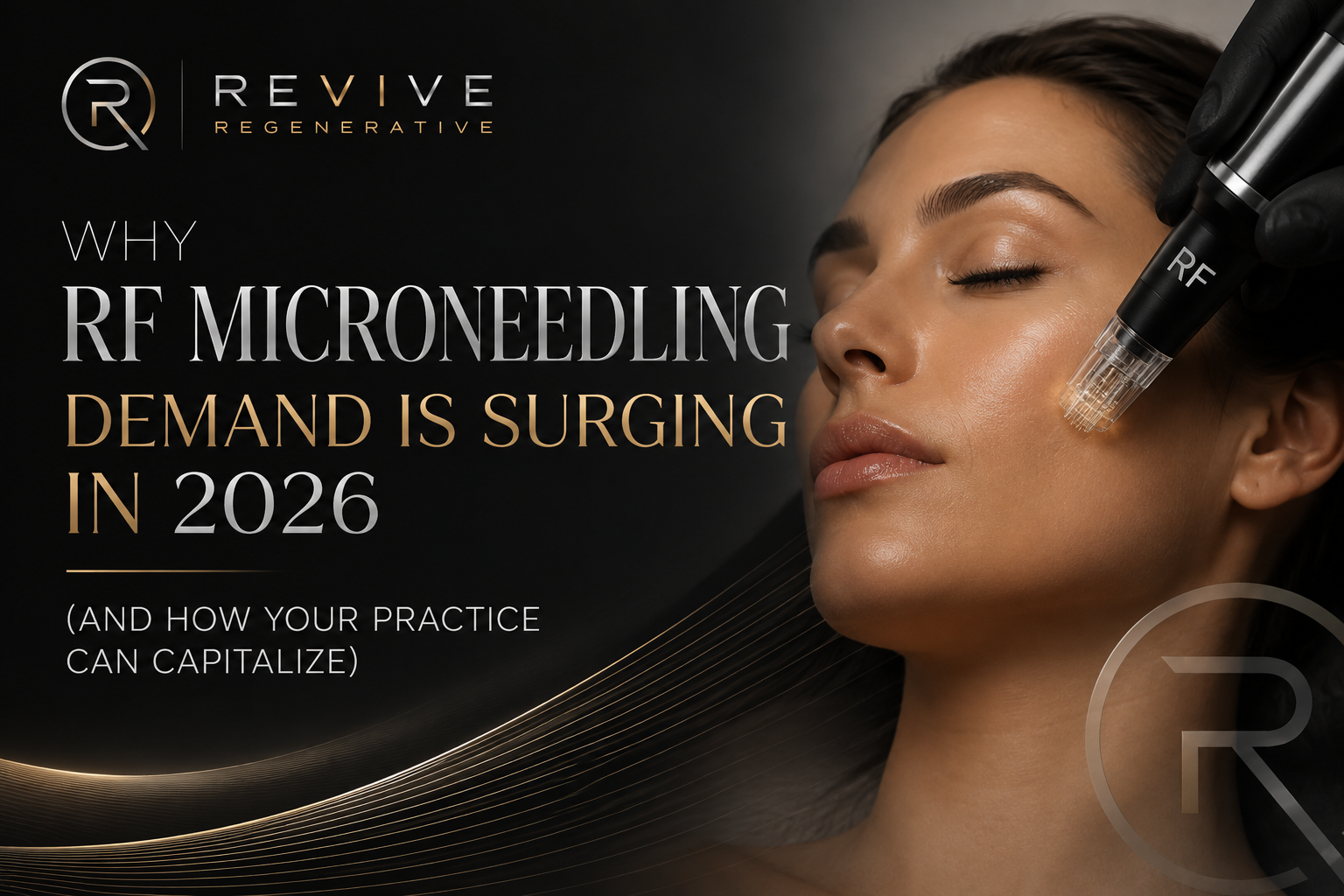
If your consultations feel busier with questions about skin tightening and texture lately, you are not imagining it. Radiofrequency (RF) microneedling has moved from a niche add-on to one of the most requested treatments in aesthetics, and the demand is not slowing down. For providers deciding where to invest next, this category is one of the clearest growth opportunities of 2026.
Here is an honest look at why patient demand is climbing, what the numbers say about the revenue potential, and how to choose a device that will actually earn its place in your treatment room.
The RF microneedling boom, by the numbers
The growth in this category is not hype. It shows up in both hard market data and procedure volume.
- The global RF microneedling market was valued at roughly $1.6 billion in 2025 and is projected to reach $4.3 billion by 2035, a compound annual growth rate above 10 percent, according to Vantage Market Research.
- The American Society for Aesthetic Plastic Surgery reported that radiofrequency microneedling procedures grew about 28 percent year over year in 2024, making it one of the fastest-growing non-surgical treatment categories in the country.
- On the consumer side, branded RF microneedling searches carry some of the highest search volume in the entire energy-based device space, which means patients are arriving at your door already knowing the treatment by name.
Translation for your practice: this is a treatment patients are actively looking for, not one you have to sell from scratch. That changes the economics of adding it.
Why patients keep asking for it
Understanding the "why" behind the demand helps you position the treatment and set honest expectations. A few forces are driving it at once.
Natural, gradual results. The market has shifted away from dramatic, obvious work toward subtle improvement. RF microneedling fits that mood perfectly. It stimulates the skin's own collagen and elastin over weeks, so patients get a refreshed look without the "done" appearance they are trying to avoid.
It works on skin the older lasers could not. Because the collagen-stimulating energy is delivered below the surface through insulated needles, RF microneedling can be performed safely across a much wider range of skin tones than many ablative lasers. That broadens your candidate pool considerably.
One treatment, many concerns. Patients like efficiency. A single modality can address fine lines, enlarged pores, acne scarring, crepey texture, mild laxity, and even stretch marks on the body. When one treatment answers several of a patient's complaints, it is an easier yes.
The GLP-1 ripple effect. As more patients lose significant weight on medications like semaglutide and tirzepatide, many are left with looser skin on the face, neck, and body. RF microneedling has become a go-to, non-surgical answer for tightening that skin, and that pipeline of patients is only growing.
The revenue case for your practice
Patient interest is only half the story. The other half is whether the treatment makes financial sense, and RF microneedling is one of the stronger performers in aesthetics.
- It is a series-based treatment. Most protocols call for three to four sessions, which builds predictable, repeat revenue rather than a one-and-done visit.
- The average patient value is meaningful. A full RF microneedling series commonly lands in the range of $2,400 to $4,500 depending on your market and the areas treated, and many patients return for annual maintenance.
- It is high margin. Consumable costs per treatment are modest relative to the price point, and treatments fit into a standard appointment window.
- It pairs naturally with what you already offer. RF microneedling sequences well with injectables, biostimulators, and facials, which lifts the value of every treatment plan rather than competing with your existing menu.
For a busy practice, a device that supports several treatments per day across a broad candidate pool can reach a return on investment far faster than modalities aimed at a narrow audience.
What to look for in an RF microneedling device
Not all RF microneedling systems are built the same, and the differences matter for both results and workflow. As you evaluate options, weigh these factors.
Depth control and range. The ability to precisely dial needle depth, ideally across a wide range, lets you treat delicate areas like the under-eye and deeper targets like body laxity or scarring with one device.
Energy delivery and frequency. How the RF energy is delivered determines how evenly it heats the tissue and how deep the thermal effect reaches. Systems that offer more than one delivery mode give you flexibility to customize treatments to the concern in front of you.
Comfort and cooling. Patient comfort is directly tied to rebooking and referrals. Integrated cooling and real-time temperature monitoring make treatments more tolerable and more consistent from shot to shot.
Speed and workflow. A faster treatment cycle means more patients per day and less strain on your staff. Small workflow gains add up quickly over a full schedule.
Safety across skin types. Confirm the system is designed to treat the full range of patients you serve, with the sensors and controls to do it consistently.
How Avira is built for this demand
The Avira RF microneedling platform from Revive Regenerative was engineered around exactly these priorities, which is what makes it a strong fit for a practice trying to meet 2026 demand.
- Dual Frequency delivery. Avira pairs monopolar RF at 6.78 MHz for deeper, wider energy with bipolar RF for more superficial precision, so you can tailor each treatment to the concern and the anatomy.
- Wide, controlled depth range. Its needle system reciprocates across a broad depth range (roughly 0.5 to 4.0 mm), giving you access to multiple dermal layers for everything from fine periorbital lines to body laxity and scarring.
- Smart cooling and thermal monitoring. Four temperature sensors track the skin at every shot, with automated cooling that helps keep treatments comfortable and consistent.
- Faster, more comfortable sessions. Revive reports the platform delivers treatments up to twice as fast with a significant reduction in patient-reported discomfort, which supports both throughput and rebooking.
- All skin types. Avira is designed to treat the full spectrum of patients you see, broadening the audience you can confidently book.
The takeaway is not that one spec wins the sale. It is that the features providers actually feel day to day, comfort, speed, depth flexibility, and consistency, are the ones that turn a device into a busy, profitable service line.
Turning the device into a service line
Buying the machine is the start, not the finish. Practices that get the most from RF microneedling tend to do a few things well.
Package it as a series. Present the treatment as a plan of three or four sessions with a clear timeline, not a single appointment. It sets accurate expectations and protects your results.
Bundle for specific concerns. Build named protocols around the problems patients describe, such as acne scar revision, post-weight-loss tightening, or a "glow" series, so patients can see themselves in the offer.
Show your work. Standardized before-and-after photos in consistent lighting are the single most persuasive marketing asset for this treatment. Start capturing them from day one.
Cross-sell thoughtfully. RF microneedling sits naturally alongside injectables and biostimulators. A combined plan serves the patient better and raises the value of the visit.
Frequently asked questions from providers
How is RF microneedling different from traditional microneedling?
Traditional microneedling creates micro-injuries at the surface to trigger collagen. RF microneedling adds radiofrequency energy delivered through the needles, heating the deeper dermis to drive stronger tightening and remodeling. The RF component is why it is priced higher and why patient demand has grown so quickly.
How long until the device pays for itself?
It depends on your volume and pricing, but because RF microneedling is a series-based, high-margin treatment with a broad candidate pool, practices that market it actively often reach return on investment faster than with single-visit modalities. Run the math on your own average series price and realistic weekly bookings.
How does Avira compare to the branded systems patients ask about?
Patients often arrive naming a specific brand, but they are really asking for the treatment. What matters clinically is depth control, energy delivery, comfort, and consistency across skin types. Avira's dual-frequency design, wide depth range, and integrated cooling are built to deliver the outcomes those patients are seeking.
Can it be used on the body, not just the face?
Yes. RF microneedling is widely used for the neck, abdomen, arms, knees, and other areas, and it is a popular option for stretch marks and post-weight-loss skin laxity. A wide depth range is what makes strong body treatment possible.
Do my injectors need special training?
Providers should be trained on any energy-based device before treating patients. Reputable suppliers include onboarding and protocol training as part of the process, so ask about training and clinical support before you buy.
Bring RF microneedling to your practice
RF microneedling is one of the rare treatments where patient demand, clinical versatility, and strong margins line up at the same time. Meeting that demand starts with a device your team trusts to deliver comfortable, consistent results across every patient who walks in.
To see how the Avira RF microneedling platform fits your practice, or to compare it against the rest of the Revive device lineup, get in touch with our team to request details or a demonstration.
This article is intended for licensed medical and aesthetic providers. Device capabilities and performance figures reflect manufacturer information. Treatment protocols, candidacy, and results vary by patient and provider.
Latest insights and trends